Construction Updates for Homeowners: How Builders Keep Buyers Informed
Home buyers who don't hear from their builder fill the silence with worry, calls and reviews. Here's what to tell them during construction, how often, and how Vedo writes the weekly update from your site walks.

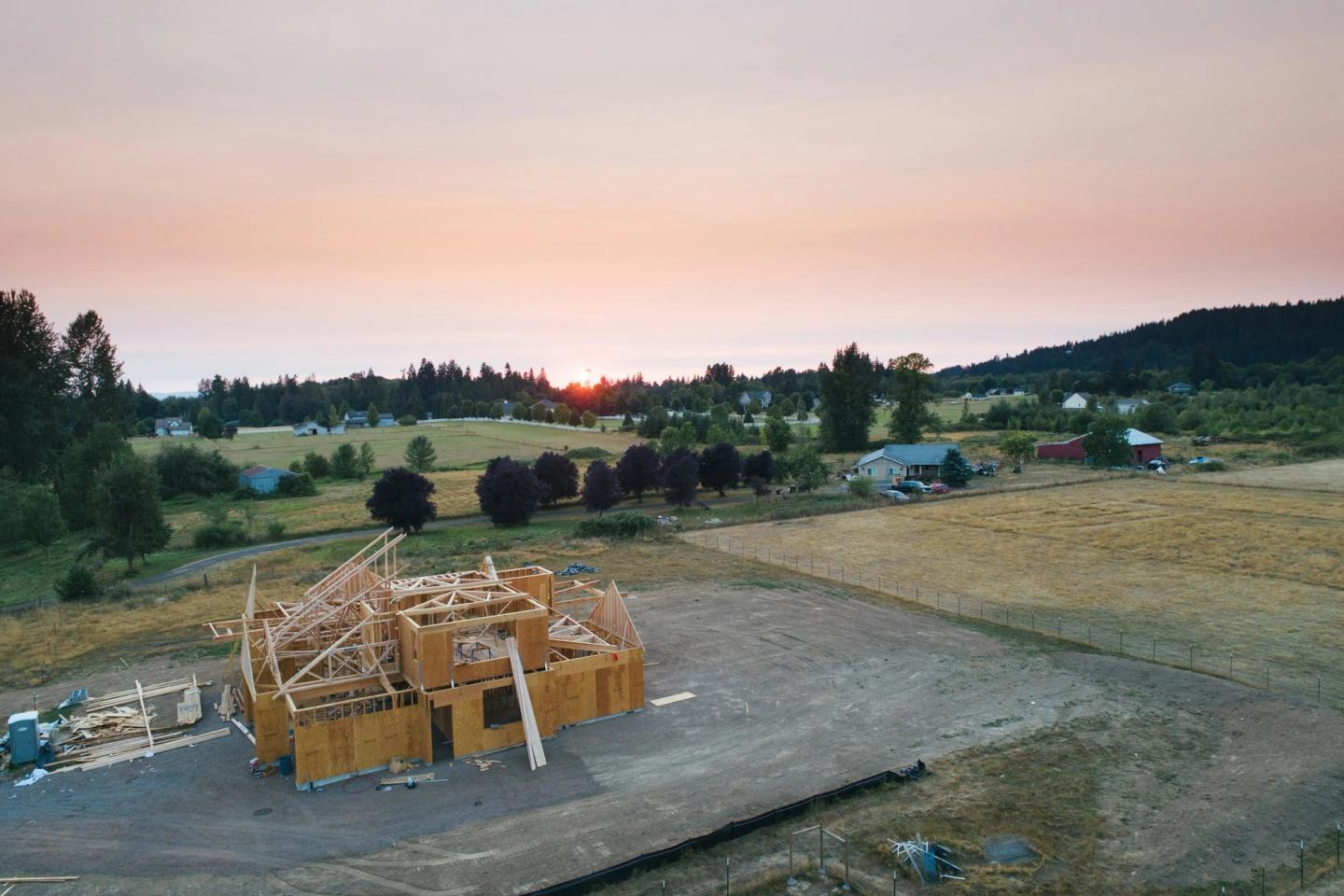
It's week 9 of 26. On Saturday, the buyers drive past their lot and see a wooden frame, a dumpster and nobody working. They text the sales office. Then they call the super. Nobody answers until Monday, and by then they've asked in the neighbourhood Facebook group whether anyone else's builder has gone quiet.
Nothing was wrong. The roof trusses went up on Friday and the windows were booked for Tuesday. Nobody told them.
Homeowner communication during construction isn't a nice extra. Buyers who hear nothing assume the worst, and they bring that worry to the super's phone, the sales office and, later, to their reviews. This guide covers what homeowners want to know during construction, how often to tell them, how to keep buyers informed without your super's phone ringing all day, and how Vedo writes the update from your site walks.
Why homeowner communication matters
There's less recent research on this than you'd expect, and we'd rather tell you that than stretch it. What there is points the same way.
- Buyers want the builder to reach out first. In a US study of new home buyers reported by Pro Builder, buyers wanted their builder to start about 60% of the conversations during the build, and communication from the superintendent about the schedule was among the lowest-rated parts of the experience. That data is from 2013 (Pro Builder).
- Communication is still a weak spot. In New Zealand's national survey of new house owners, 18% were dissatisfied with their builder's communication in 2024 (BRANZ).
- Unhappy buyers escalate. In Ontario, 70% of the 2,543 homes that had a Tarion conciliation inspection in 2022 had items found to be under warranty (Tarion), and a conciliation charged to the builder stays on the builder's public record for 10 years (Tarion).
Most builders don't need a study to know this. They see it in their reviews, their warranty calls and the number of times a buyer phones the super.
What homeowners want to know during construction
A good construction progress update answers the questions buyers are already asking each other:
- Where are we? "Week 9 of 26" says more than "framing."
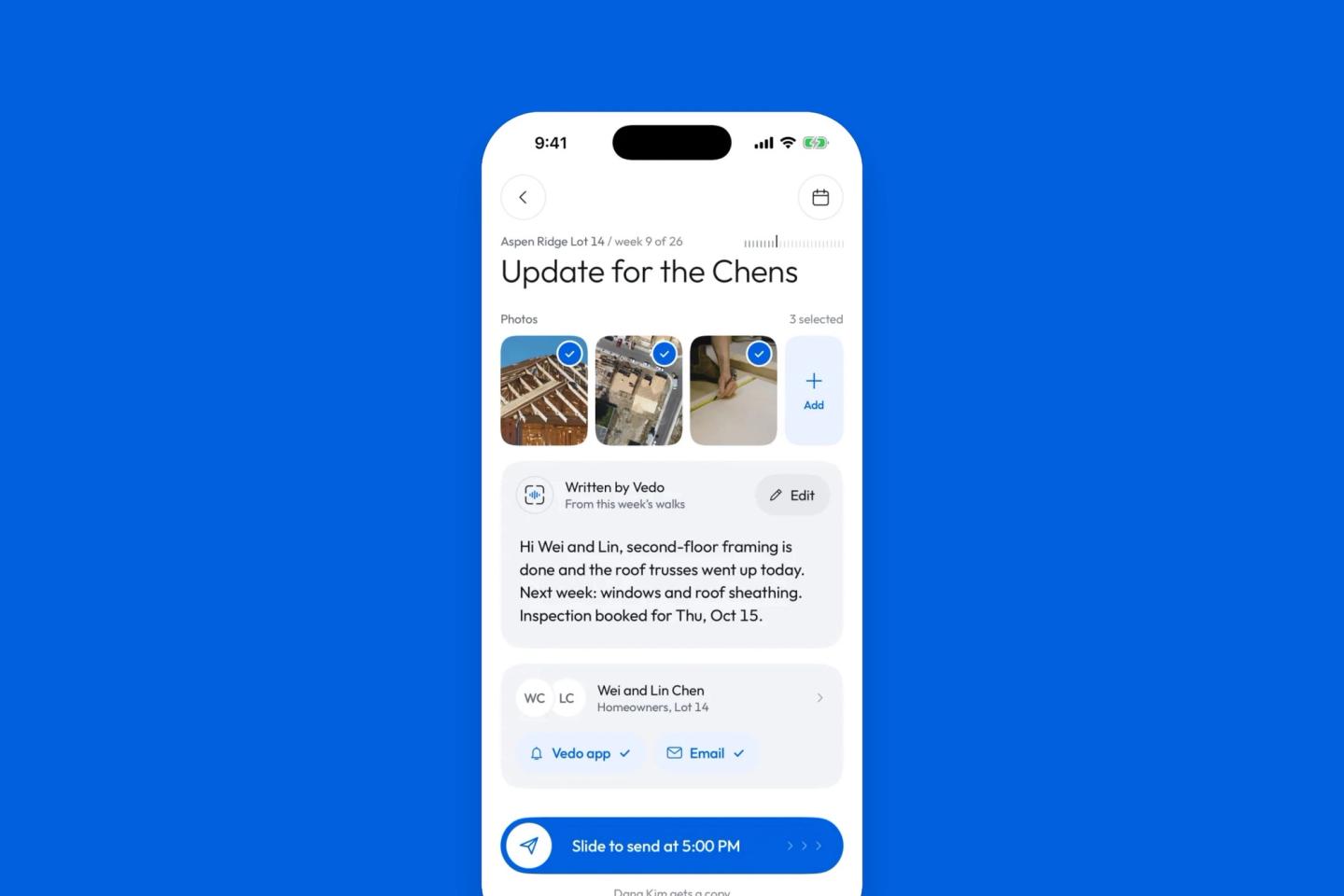
- What got done this week, in plain words. "Second-floor framing is done and the roof trusses went up."
- What's next. "Next week: windows and roof sheathing."
- What's booked. Inspections and other dates they care about.
- When they can move in, as far as you know it.
- Photos. Two or three good ones beat twenty.
- Who to ask. One name, and how to reach them.
What they don't need is the site's working list: hazards, deficiencies, trade problems or the back-and-forth of the build. Those belong to you and your trades. What they do need, from you and in your own words, is any change that affects them, like a new move-in date.

How to keep buyers informed without your super's phone ringing
- Pick a rhythm and keep it. Same day, same time, every week. Buyers stop chasing when they know the update is coming.
- Lead with progress and photos. What changed since last week, shown.
- Always say what's next. It answers half the questions before they're asked.
- Use one channel and one contact. An email and a page they can come back to, and one person who answers.
- Tell them about changes yourself, early. A delay they hear from you is a conversation. A delay they find on their own is a complaint.
- Don't promise dates you don't control. Say what's booked and what's planned, and which is which.
- Keep the site's working list off the update. Share the house, not the deficiency list.
How Vedo writes the homeowner update from your site walks
On residential sites, Vedo turns the week's walks into the homeowners' update, so the super isn't writing one more thing at the end of the week.
Add the homeowners once
The super or project manager adds the homeowners to their home in the app. They get a welcome email with a link to their home's own page, with no account or password to set up, and a code to follow their home in the Vedo app.
Vedo drafts the update from the week's walks
Each week, on the update day you pick (Friday unless you change it), Vedo drafts the update from that week's daily logs and progress photos, and next week's steps from the schedule you keep. It writes a short headline and a few lines, picks up to three photos with captions, and gets it ready to go out at 5:00 PM site time. On the other work days, a one- or two-line note goes out at the same time, and it's skipped on days with no work.
The draft sticks to progress. It's written to leave out hazards, deficiencies, delays, costs and trade names, so the site's working list never reaches the buyers by accident. A schedule change is yours to tell them, in your words.
You decide what goes
Before it goes, the super can edit the text and headline, take photos out or add others (up to six), change the send time, send it now or cancel it. You choose how it works on each site: let the weekly update go at 5:00 PM on its own, or turn on Wait for my review so it only goes after you've read it. We suggest review for the first few weeks. The short notes on other work days go on their own.
What the homeowners see
The update arrives by email, with its photos and next week's steps. Their home's page shows where the build is ("week 9 of 26"), the latest update with its photos, what's next and their messages with the super. In the Vedo app they also see the days to the next inspection and the weeks to move-in, from the schedule you keep.
They can reply. A homeowner's reply reaches the super and the project manager right away, and the super's own messages go to them right away too.
They only see what you share
Homeowners can see their sent updates, their messages, the schedule and the photos you've shared with them. They can't see walks, flags, the punch list, daily logs or site photos you haven't shared.

What Vedo won't do
- It isn't a live camera. Homeowners get a weekly update, short notes on work days and messages, not a live feed from the site.
- "Week 9 of 26" comes from the schedule you keep, not from the walks. Keep the start date, the length and the inspections up to date, and the page stays right.
- The draft can be wrong. It's written by AI from your logs and photos. Read it, or turn on review so nothing goes until you have.
- It doesn't blur faces. Check photos with people in them before they go out.
- It doesn't handle selections, change orders or payments. It's for keeping buyers informed about the build, not for running the sale.
Try it with one home
Pick one home that's early in the build. Add the buyers, turn on review, and let Vedo draft the weekly update from your walks for a month. Count the calls and texts from those buyers, and compare them with a similar home where you didn't.
If you want to try it with one of your homes, book a demo or join the waitlist. And if what the office sees matters as much as what the buyers see, read Field to Office Communication.
Frequently asked questions
How often should a builder update homeowners during construction?
Once a week, on the same day, works for most builders, with a quick note when something important happens in between. A steady rhythm matters more than how often: buyers stop chasing when they know when the next update is coming.
What should a construction progress update include?
Where the build is (for example, week 9 of 26), what got done since the last update, what's next, any inspections or dates that are booked, two or three photos, and one person to contact with questions.
Should builders share deficiency lists with buyers during construction?
Usually not during the build. The deficiency or punch list is the site's working list, and most items are fixed long before possession. Buyers see the finished home at the pre-delivery inspection or final walkthrough, where their own list is made.
How do you tell a homeowner about a construction delay?
Tell them early, yourself, in plain words: what changed, why, and the new date as far as you know it. Don't wait for them to notice, and don't promise a date you don't control.
What is a homeowner portal?
A homeowner portal is a private page or app where buyers can follow their home's build: progress, photos, schedule, updates and messages with the builder, in one place instead of scattered emails and texts.
Sources
- Pro Builder, The New-Homebuyer's State of Satisfaction (2013 data)
- BRANZ, New House Owners' Satisfaction Survey 2024
- Tarion, Q&A from the 2023 Annual Public Meeting and chargeable conciliations
- Photos from Unsplash: Andrew Mead, Avel Chuklanov, Grove Brands, Vitaly Gariev and Jakub Żerdzicki